When starting a lighting project for a hotel or office building, the first question is rarely which luminaire to specify. It is which control protocol to use. DALI-2, KNX, and Zigbee are familiar territory, but since around 2018 Casambi has been appearing with increasing frequency in design specifications across Vietnam and forcing ME engineers to take a closer look.
Casambi is a wireless lighting control system built on Bluetooth Low Energy Mesh (BLE Mesh) technology, enabling full control of a lighting network via smartphone without a central hub or dedicated control cabling. The word "wireless" sometimes comes with concerns about reliability, but Casambi has been deployed in over 70 countries and operates in large-scale projects from 5-star hotels to multi-floor office towers.
This article explains what Casambi is, how BLE Mesh works, how it compares with DALI-2 and KNX, and helps you assess whether Casambi is the right fit for your project.
What is Casambi?
Casambi is a wireless lighting control system built on Bluetooth Low Energy Mesh (BLE Mesh) technology, standardized by the Bluetooth SIG. It enables full control of a building's lighting network via smartphone or tablet, with no central hub, no dedicated control cabling, and no proprietary programming hardware required.
Put simply: you open the Casambi app on your phone, walk into a space, and the luminaires appear in the network automatically. No electrician call-out, no central controller to configure. Casambi was developed by Casambi Technologies (Finland) from 2012 and is now present in over 70 countries.
The fundamental difference from traditional protocols: KNX and DALI-2 require bus couplers, DALI power supplies, or central controllers. With Casambi, each end device handles its own mesh logic, self-routes signals, and self-heals when any node in the network loses connection.
How does Casambi work?
BLE Mesh is a wireless mesh protocol standardized by the Bluetooth SIG in 2017, supporting hundreds of devices communicating in a multi-point topology within a single network. Casambi builds proprietary firmware on top of this foundation, optimized entirely for commercial and residential lighting applications.
Each Casambi device, whether a CBU-ASD module attached to a DALI driver or a CBU-TED for 0-10V signals, performs two functions simultaneously: receiving control commands and relaying those signals to neighboring nodes. The result is a network that expands automatically with each device added, requiring no additional infrastructure configuration.
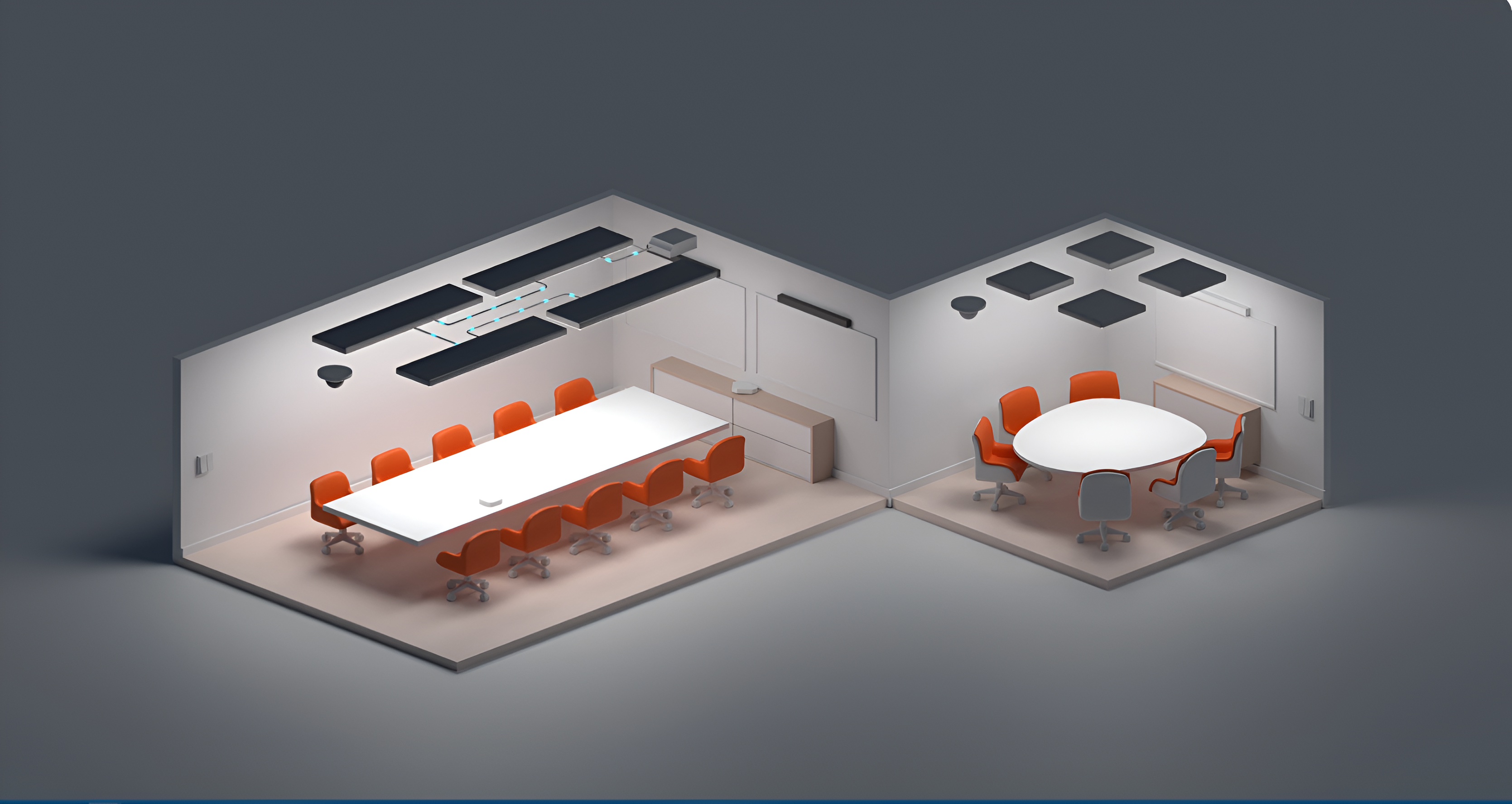
Practical range between two adjacent nodes is typically 10 to 15 meters depending on wall and ceiling materials. Because the architecture is mesh-based, control signals are relayed through multiple intermediate nodes, so total coverage depends on device density rather than the range of a single transmitter. A 1,000 sqm office with 60 to 80 Casambi downlights rarely encounters coverage issues.
The smartphone running the Casambi app is only a control interface, not a hub. When the phone is switched off or moves out of range, the system continues to run normally according to pre-configured schedules and sensor triggers.
How is Casambi different from DALI-2, KNX, and Zigbee?
If you have worked with DALI-2 or KNX, the difference with Casambi becomes very clear at the installation stage.
With DALI-2: you need to run a dedicated DALI bus pair throughout the entire building, install a DALI power supply, connect each driver to the bus, then commission each individual address. With Casambi, you simply wire power to the luminaire as normal, attach a CBU module, and open the app. No additional bus wiring at all.
With KNX TP: the most feature-rich and reliable protocol available, but it requires ETS-certified engineers and a long commissioning process. Total project cost is also significantly higher than Casambi. KNX makes sense when you need to integrate multiple building management systems onto a single bus. Casambi focuses exclusively on lighting.
With Zigbee: also a wireless protocol, but requires a Zigbee coordinator acting as a central hub. If the hub fails, the entire network loses control. Casambi has no such single point of failure because the mesh architecture is fully decentralized. Zigbee is also not optimized for high-specification commercial lighting and is more commonly found in the B2C market.
In summary: Casambi is not a direct competitor to KNX in buildings that require full BMS integration across multiple systems. Casambi is the stronger choice when the goal is flexible lighting control, fast deployment, and no additional control cabling.
What does the Casambi device ecosystem include?
Casambi does not manufacture luminaires or drivers. Instead, it provides modules and firmware for lighting manufacturers to integrate into their products. This means you have a wider hardware choice than with almost any other protocol.
Common CBU module variants:
CBU-ASD: DALI interface module, attaches to luminaire drivers with a DALI input. The most common variant in commercial projects in Vietnam.
CBU-PWM: PWM output control, widely used for LED strips in hotels and restaurants.
CBU-TED: 0-10V interface, compatible with legacy analog drivers. An effective retrofit solution for buildings with existing analog infrastructure.
CBU-DCS: direct mains output control for lamps without a separate driver.
Beyond the CBU modules, two other products are essential to understand:
Casambi Gateway: hardware bridge connecting the BLE Mesh network to the building's IP infrastructure, supporting BACnet/IP and Modbus TCP for BMS integration. Required when the project runs a Siemens, Honeywell, or Johnson Controls BMS, or when remote access via API is needed.
Casambi-Ready luminaires: luminaires with a Casambi module pre-integrated by the manufacturer. No external module required, cleaner installation. Manufacturers with Casambi-Ready products available in Vietnam include Osram, Tridonic, Helvar, Glamox, and iGuzzini.
Over 300 manufacturers worldwide hold Casambi Ready certification, and the range of Casambi-Ready products distributed in Vietnam is growing steadily.
Which building types is Casambi best suited for?
Casambi is best suited to projects that need flexible lighting control without running additional control cabling. In real-world deployments across Vietnam, Casambi is most commonly found in:
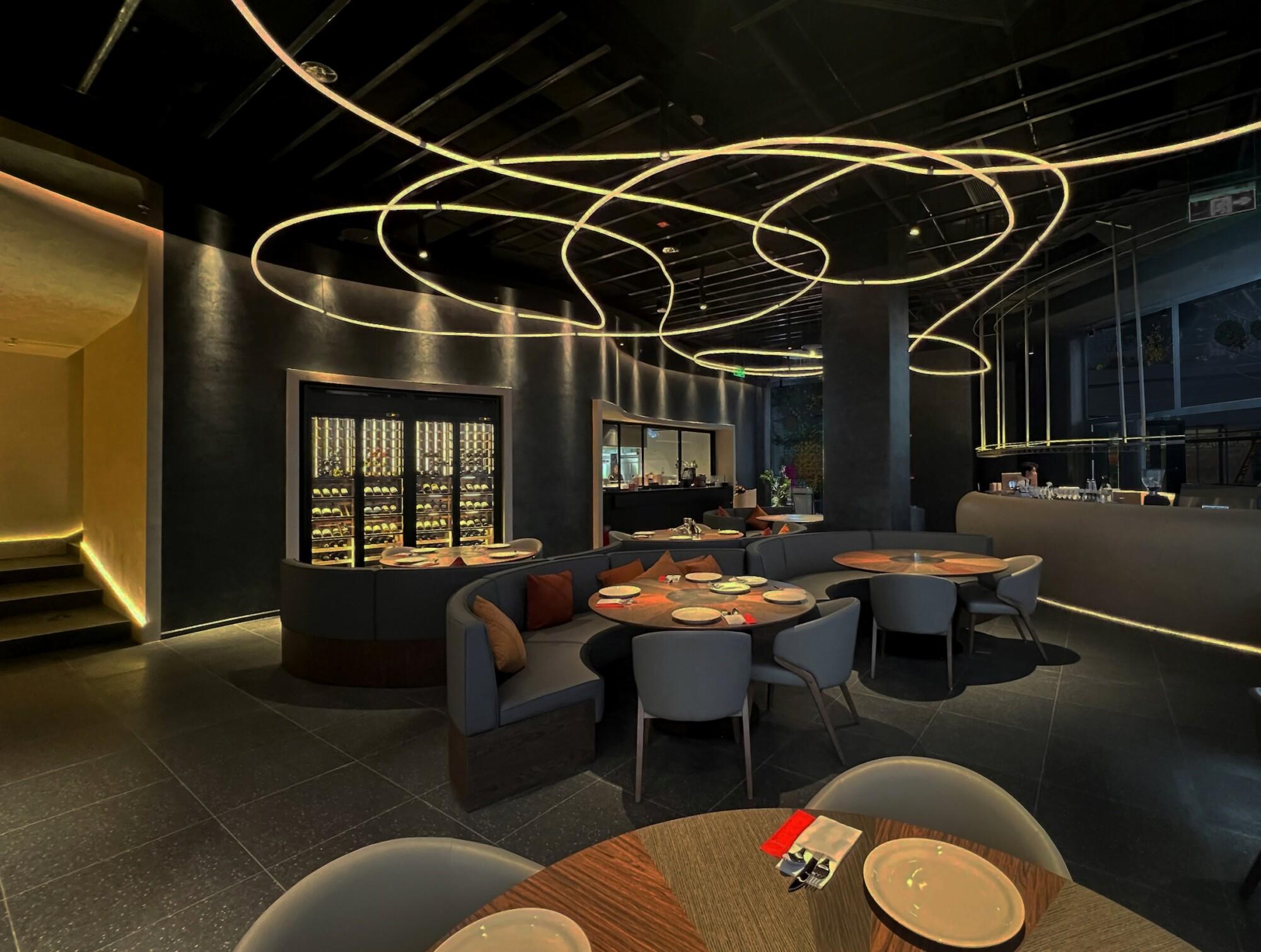
Boutique hotels and resorts: the environment with the most demanding lighting requirements by zone and time of day. Lobby, corridor, restaurant, and spa each require a different lighting mood. With Casambi, the facility technician can change any scene at any time from the app without calling an electrician.
Multi-tenant offices and coworking spaces: tenant changes are a permanent operational reality. With DALI-2 or KNX, every zone reconfiguration means opening the electrical infrastructure. With Casambi, a technician regroups luminaires in the app within a few hours without touching any wiring.
Museums and art galleries: each new exhibition requires a completely different lighting layout. Casambi is the only protocol that allows the technical team to regroup fixtures and create new scenes in half a working day with no additional construction cost.
Restaurants and F&B venues: morning service needs energy, evening service needs warmth. Casambi allows pre-set scenes to switch automatically on a time schedule, with no manual intervention required.
High-end residences and penthouses: owners can reconfigure lighting to their preferences without calling a technician. A practical advantage that KNX does not offer at this scale.
How does Casambi integrate with BMS and KNX?
A common question is whether Casambi can communicate with a BMS. The answer is yes, through the Casambi Gateway.
The Casambi Gateway is a hardware device that connects the BLE Mesh network to the building's Ethernet infrastructure. It supports BACnet/IP and Modbus TCP, allowing the BMS to send control commands or read status from individual lighting zones. The ME engineer configures read/write data points for each Casambi zone on the gateway, after which the BMS handles the lighting zones like any other BACnet device on the network.
This is the standard integration path for office and hotel projects running Siemens Desigo, Honeywell EBI, or Johnson Controls Metasys. Several large projects in Vietnam currently run Casambi for lighting in parallel with KNX or BACnet for other building systems including HVAC, blinds, and energy management.
Casambi: strengths and limitations
No single protocol suits every project. The following assessment is based on real deployment experience in Vietnam.
Clear strengths:
No dedicated control cabling required, significant cost saving on retrofit projects.
Fast commissioning with no ETS software or DALI commissioning tool needed.
Flexible reconfiguration after handover, facility staff can manage it themselves.
Wide ecosystem, over 300 manufacturers with Casambi Ready products.
No single point of failure, unlike hub-based systems.
Limitations to consider:
End-device cost is typically higher than standard DALI-2 components. For new-build projects with existing cable infrastructure, DALI-2 may be less expensive overall.
A single network supports a maximum of 250 nodes. Very large buildings require multiple networks managed through Casambi Cloud.
Dependent on Casambi's proprietary firmware, not a fully open standard like DALI-2.
BMS integration requires purchasing a Casambi Gateway, adding cost compared to DALI-2 or KNX which have native BMS interfaces.
Conclusion
Casambi is one of the most compelling wireless lighting control options for commercial and hospitality projects in Vietnam in 2026. Not because it is the best solution in every situation, but because it solves exactly the problem many projects face: flexible lighting control, fast deployment, and no additional control cabling infrastructure.
If you are evaluating Casambi for an upcoming project, contact us via hotline 0918.918.755 or email sales@knxstore.vn for project-specific technical advice. KNXStore.vn is an authorized Casambi distribution and technical support partner in Vietnam.